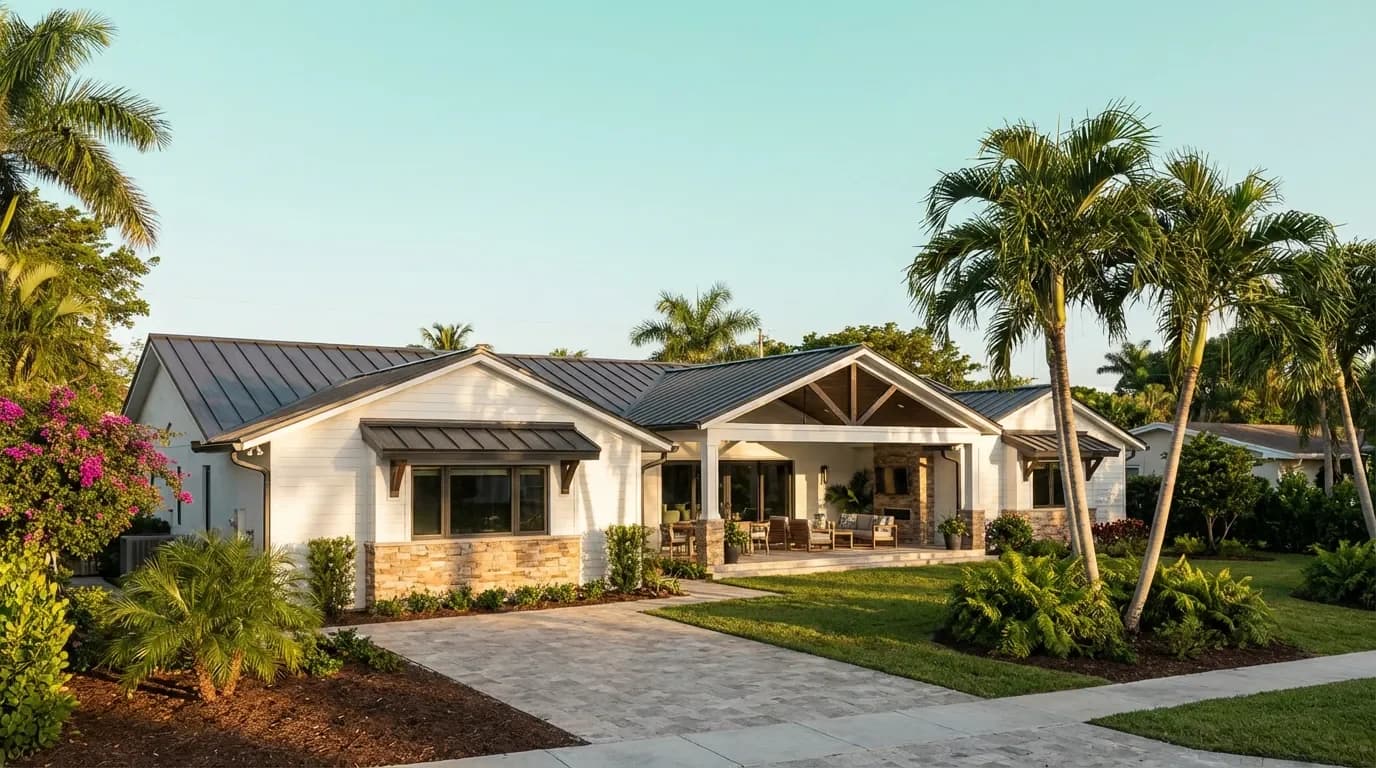
Home Systems · South Florida
Home Systems Contractor for South Florida Homeowners
Home systems contractor serving Broward & Palm Beach Counties. Generators, panel upgrades, repipes & tankless water heaters — all under one licensed GC.
Reviewed by Aldo Dellamano, Licensed Florida General Contractor·Last updated: April 2026
Home Systems services
The trades running inside your walls
Generators, electrical, and plumbing — each has its own detailed guide.
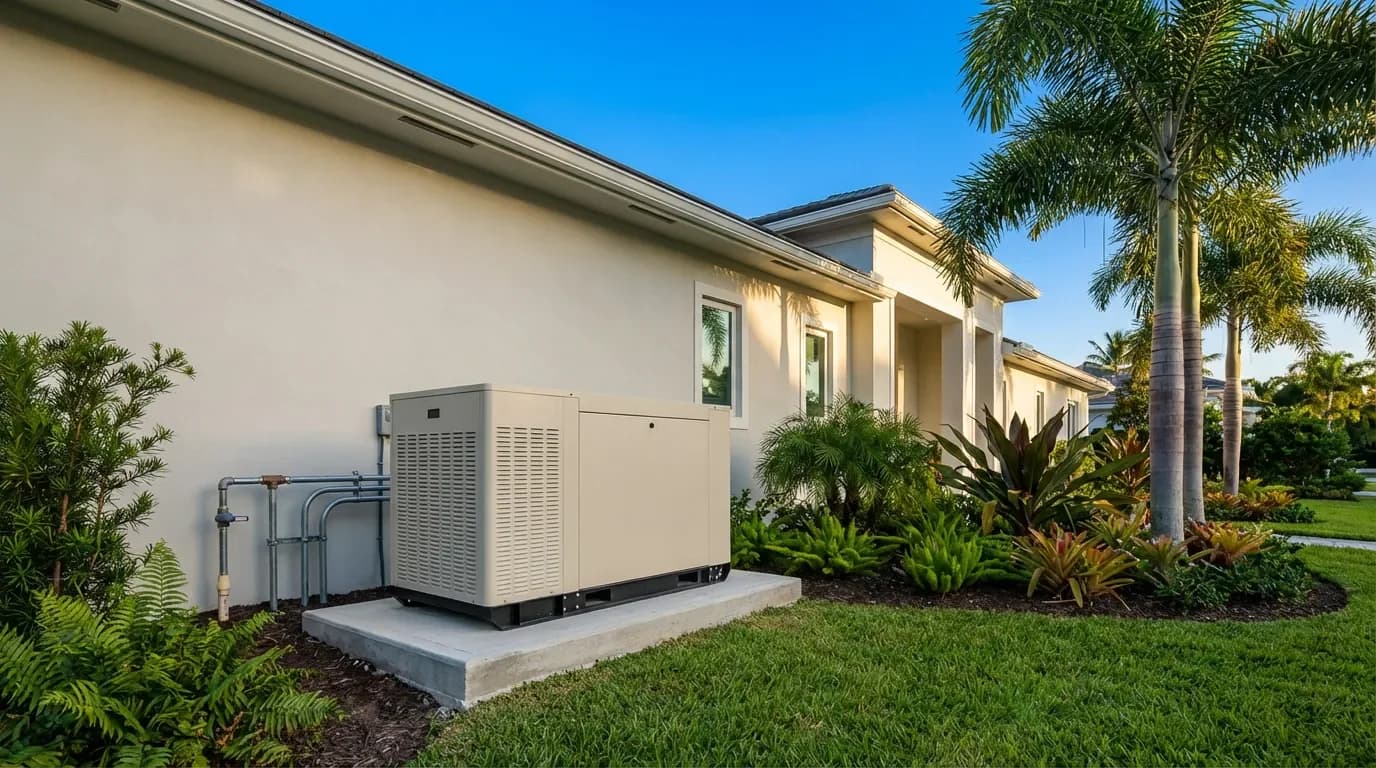
Whole-House Generator Installation
Standby generator sales, sizing, permit, and installation — coordinated by a GC who personally holds the mechanical, electrical, and plumbing licenses.
Learn more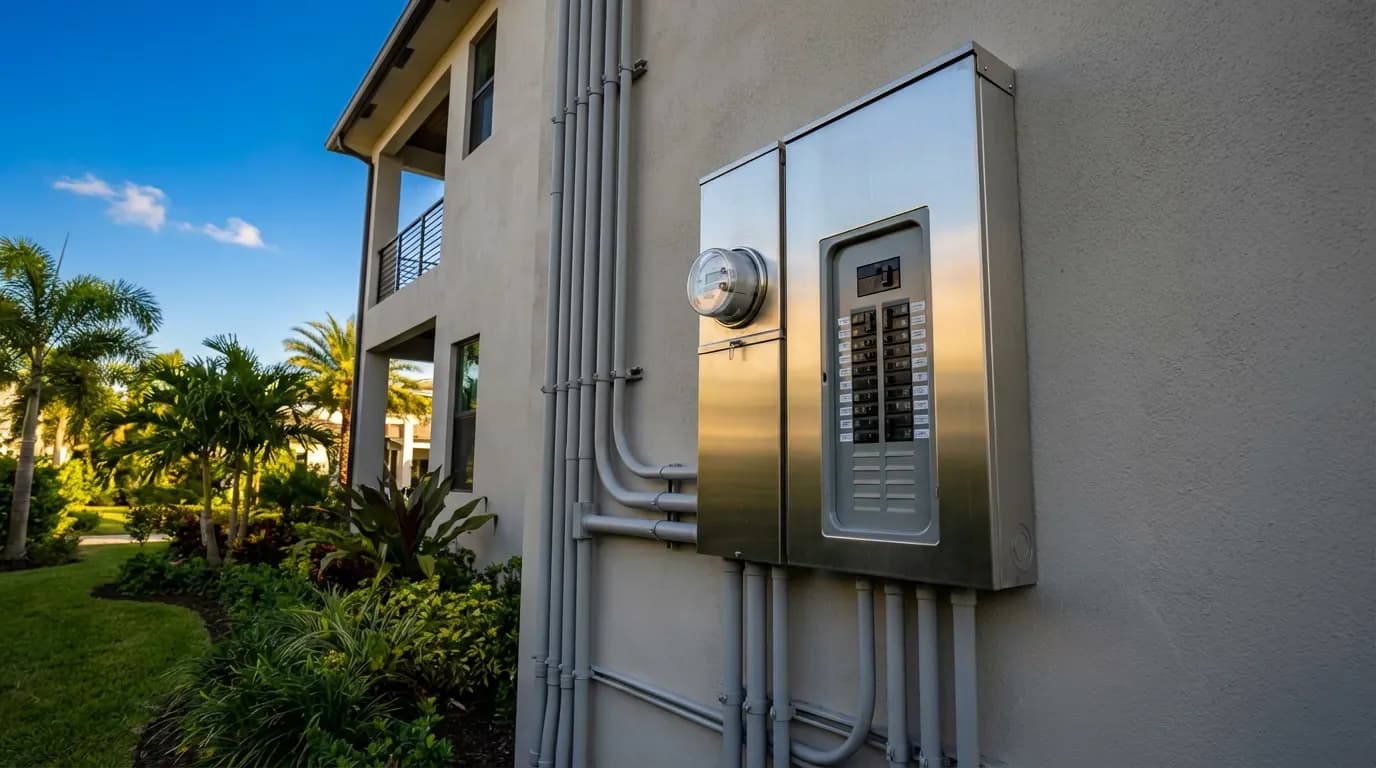
Electrical Contractor
Licensed residential electrical work — panel upgrades, service changes, and full rewires by your GC.
Learn more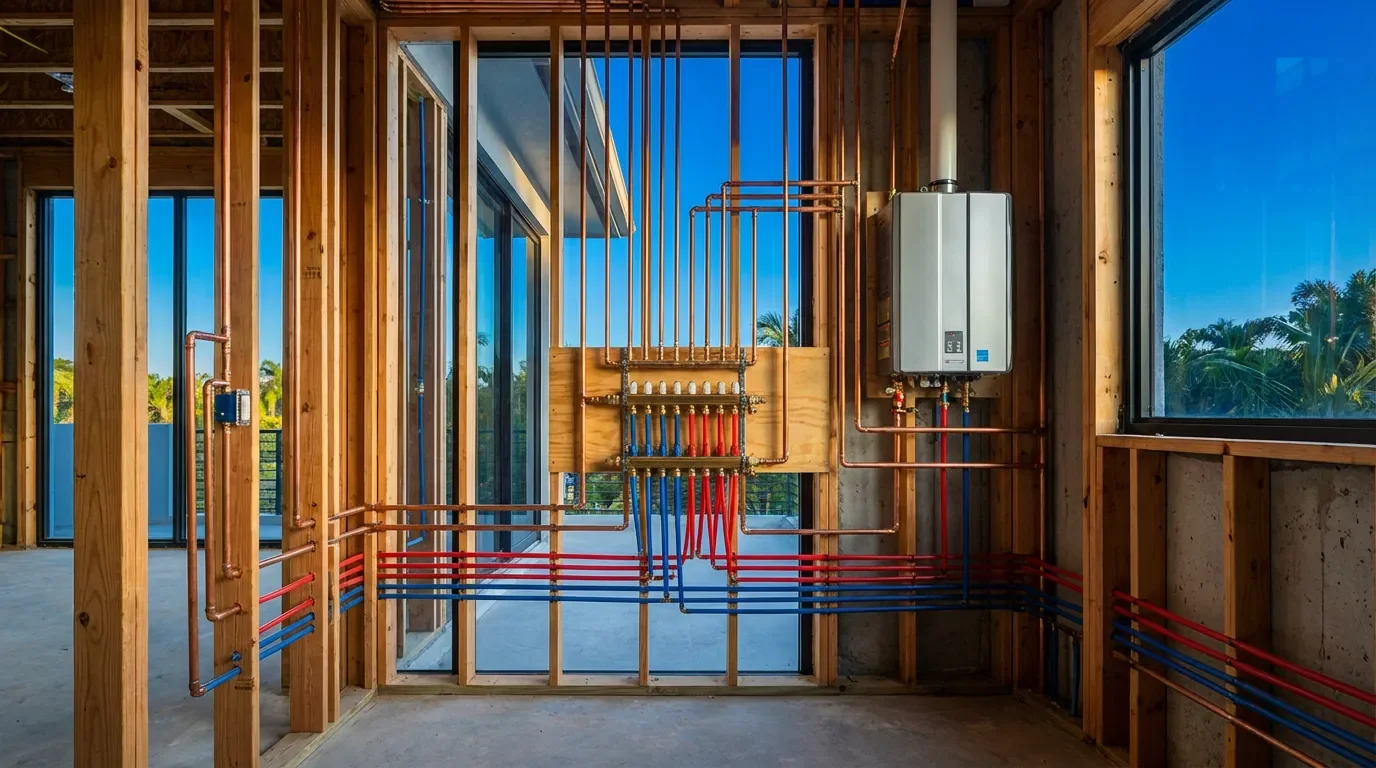
Plumbing Contractor
Licensed residential plumbing — repipes, fixture replacement, and new construction rough-in.
Learn more
Introduction
outh Florida homes face a punishment that most of the country never experiences: Category 4 winds, salt-air corrosion, and a grid that goes dark when storms roll through. Your electrical panel, plumbing, and backup power systems need to be built to a higher standard — and coordinated by someone who understands all three trades at once. Dellamano Construction is a licensed home systems contractor serving Broward and Palm Beach Counties, holding active Florida DBPR credentials as a Certified General Contractor (CGC1525289), Certified Mechanical Contractor (CMC1251666), and Certified Plumbing Contractor (CFC1434398).
That means one company self-performs your generator installation, panel upgrade, and whole-home repipe — with zero inter-trade finger-pointing and one permit path through the county. As part of our broader Construction & Renovation practice, home systems work ties directly into Interior Renovation and Exterior Living & Outdoor Construction for homeowners doing full-scope projects.
Questions about your remodel or addition?
Get a free, no-pressure estimate from our licensed South Florida team.
Florida Building Code (FBC) Chapter 4 requires separate permit pulls for mechanical, electrical, and plumbing scopes — 3 separate inspections minimum on a full home systems project. Most general contractors subcontract all three trades, which means 3 different license holders, 3 scheduling queues, and zero shared accountability when an inspection fails. Dellamano Construction holds all 3 active DBPR licenses under founder Aldo Dellamano, eliminating the coordination gap.
“Most general contractors subcontract all three trades, which means 3 different license holders, 3 scheduling queues, and zero shared accountability when an inspection fails.”
On a typical generator-plus-repipe project, that single-GC model cuts inspection scheduling delays by removing the back-and-forth between subs. aspx) both allow the licensed GC to pull and coordinate all MEP permits when the GC holds the qualifying trade licenses — exactly the structure Dellamano operates under.
One License Holder. Three Trade Scopes.
Dellamano Construction runs under three active Florida DBPR licenses held by founder Aldo Dellamano: Certified General Contractor, Certified Mechanical Contractor, and Certified Plumbing Contractor. The multi-trade license model removes the coordination failures that plague multi-sub projects — verify any contractor's credentials at Florida DBPR.
What You Get
Core Home Systems Services
Whole-House Standby Generators
Generac and Kohler liquid-cooled standby units (11 kW–26 kW) with automatic transfer switches (ATS). The ATS detects grid loss within seconds and switches your home to generator power without manual action.
Panel Upgrades & Service Changes
200-amp and 400-amp service upgrades, main panel replacement, and sub-panel additions. Older homes in Fort Lauderdale and Pompano Beach often carry 60- or 100-amp service that can't support modern loads.
Whole-Home Rewires
Full replacement of knob-and-tube or aluminum branch-circuit wiring with copper THHN (thermoplastic high-heat-resistant nylon-coated) conductors and arc-fault circuit interrupter (AFCI) breakers per FBC.
Whole-Home Repipes
Complete replacement of corroded galvanized or polybutylene supply lines with CPVC or PEX-A (cross-linked polyethylene) piping — the two most code-accepted options in South Florida for both hot and cold supply.
Tankless Water Heater Installation
Natural gas and propane tankless units (Rinnai, Navien) deliver endless hot water and qualify for ENERGY STAR rebates. Installation includes gas line sizing and dedicated venting per FBC Section 504.
Hurricane-Prep Integration
Backup generator circuits tied to storm-panel load centers, whole-home surge protection (ANSI/UL 1449 SPD), and generator placement engineered to meet HVHZ (High-Velocity Hurricane Zone) wind-load anchoring requirements.
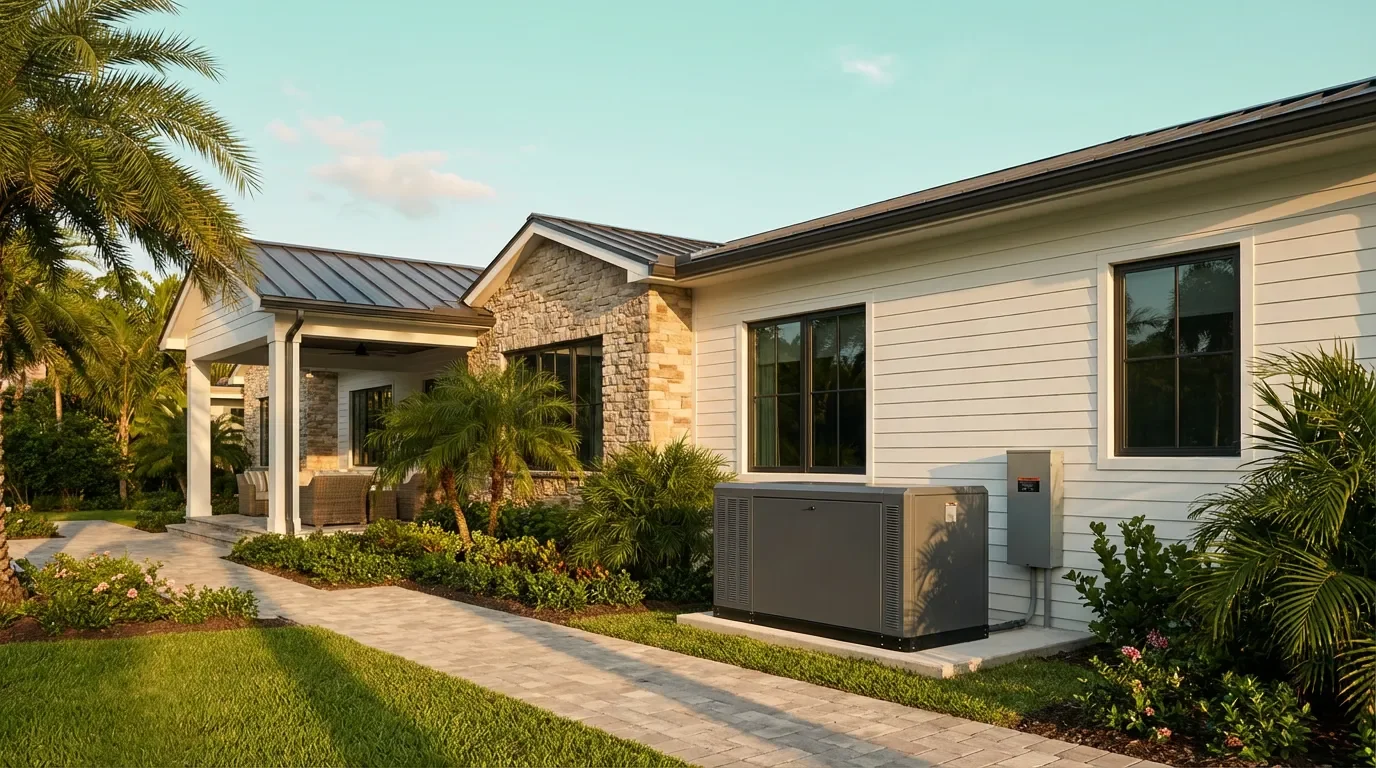
In the Field
Whole-House Generator with Automatic Transfer Switch
Whole-House Generator with Automatic Transfer Switch — Dellamano Construction, Fort Lauderdale, FL
7 million Florida customers lost power — many for over a week. A whole-house standby generator is no longer a luxury in South Florida; it's a resilience investment.
Unlike portable generators, standby units run on natural gas or propane and start automatically within 10–30 seconds of grid failure via the automatic transfer switch (ATS). Generac's 22 kW Guardian Series and Kohler's 20 kW units are the most common residential choices in Broward and Palm Beach Counties, sized to run central AC, refrigerators, well pumps, and medical equipment simultaneously.
“Unlike portable generators, standby units run on natural gas or propane and start automatically within 10–30 seconds of grid failure via the automatic transfer switch (ATS).”
Florida Building Code requires the generator to be installed on a concrete pad at a minimum 18-inch clearance from any window, door, or soffit opening — and in HVHZ zones, the pad anchoring must meet wind-load calculations. Dellamano handles the gas line extension, electrical connection to the ATS, and all permit pulls in a single project scope.
Homes built before 1990 in Weston, Plantation, and Coral Springs frequently carry 100-amp service panels — a serious undersupply for households with EV chargers, modern HVAC systems, and whole-house generators. A 200-amp service upgrade involves replacing the meter base, service entrance conductors, and main breaker panel, and always requires a utility coordination cut-in with FPL or TECO. org) mandates AFCI (arc-fault circuit interrupter) protection on all bedroom and living-area circuits in renovated homes, and GFCI (ground-fault circuit interrupter) protection within 6 feet of any water source.
“Dellamano performs electrical scope under the same GC license umbrella, keeping the scope on a single permit application.”
Whole-home rewires in older properties often uncover aluminum branch-circuit wiring installed in the 1960s–1970s — a fire hazard that requires full copper replacement or approved AL/CU-rated devices at every termination point. Dellamano performs electrical scope under the same GC license umbrella, keeping the scope on a single permit application.
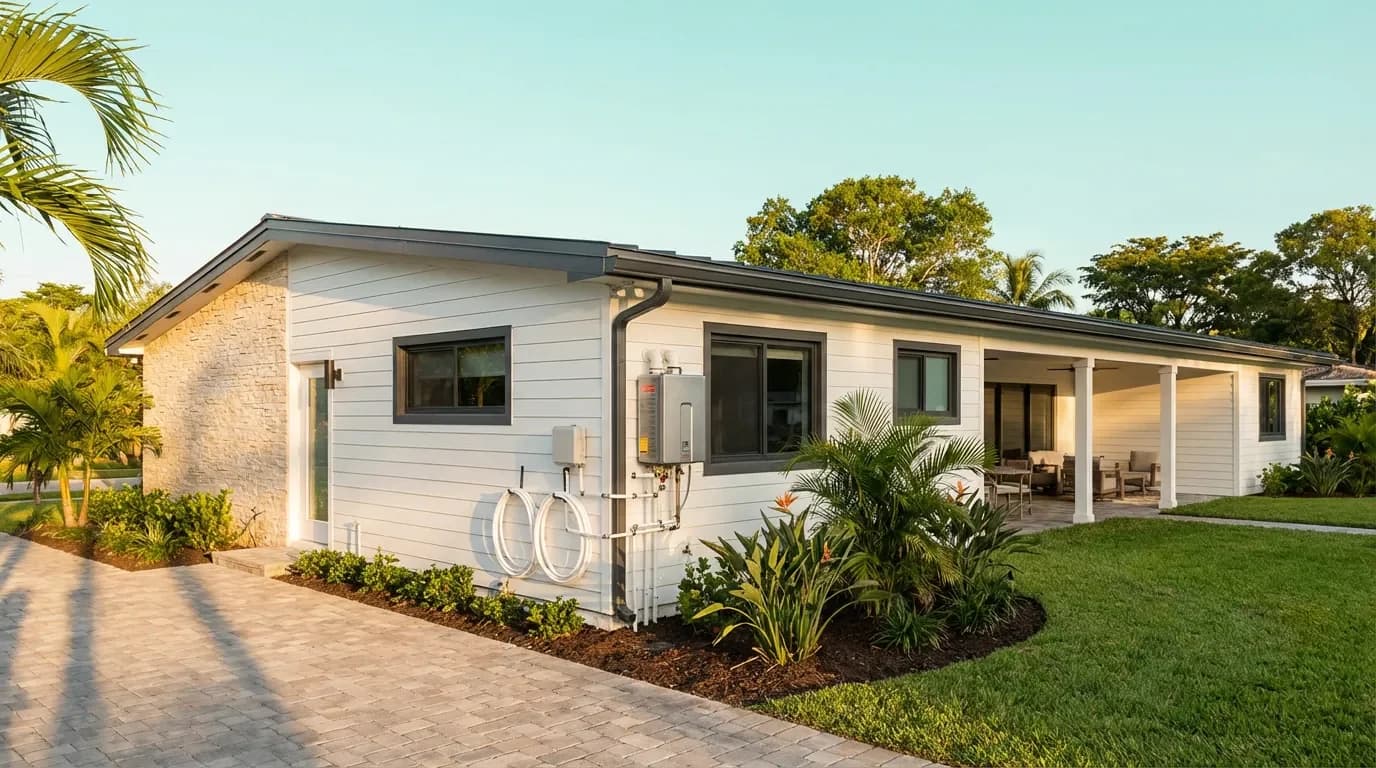
In the Field
PEX-A Repipe with Tankless Water Heater Upgrade
PEX-A Repipe with Tankless Water Heater Upgrade — Dellamano Construction, Fort Lauderdale, FL
South Florida's water chemistry accelerates galvanized steel pipe corrosion faster than most of the country — many 1980s-era homes in Boca Raton, Delray Beach, and Boynton Beach are seeing pinhole leaks and brown-tinted water from failing supply lines. org) Chapter 6. PEX-A requires fewer fittings than CPVC, which means fewer potential failure points — a real benefit in slab-on-grade homes where access is limited.
“Dellamano sizes the gas line and venting as part of the same permit pull, so you get a single inspection schedule.”
gov/watersense) data shows tankless units reduce water heating energy use by 24–34% compared to storage-tank models. Dellamano sizes the gas line and venting as part of the same permit pull, so you get a single inspection schedule.
Storm Season Is Permit Season
Permit lead times in Broward and Palm Beach Counties can stretch 4–8 weeks for MEP scopes during peak spring season. Starting your generator or panel upgrade project in January or February keeps you covered before the June 1 hurricane season open.
Ready to talk to a real local GC?
Tell us about your project — we respond within 24 hours.
Process
How a Home Systems Project Works
- 1
Free On-Site Assessment
We walk the home to evaluate your existing panel capacity, plumbing material, generator pad site, and any code deficiencies. You get a written scope with itemized costs — no vague estimates.
- 2
Permit Application
We pull all required MEP permits with Broward County Building Code Services or Palm Beach County Planning, Zoning & Building — whichever jurisdiction applies. One permit package, one point of contact.
- 3
Utility Coordination
Generator and panel upgrade work requires FPL or utility cut-in scheduling. We coordinate the utility appointment so your power outage window is planned — not a surprise.
- 4
MEP Rough-In & Inspections
Our crew self-performs mechanical, electrical, and plumbing rough-in. Inspections are scheduled in sequence, not in parallel chaos. One trade never holds up another because we own all three scopes.
- 5
Final Inspection & Commissioning
We test every system under load: generator ATS switchover, water pressure, and electrical circuit labeling. You receive a copy of every passed inspection card and the closed permit for your records.
Side-by-Side
Single-GC MEP vs. Multi-Sub Approach
| Feature | Dellamano (Single-GC MEP) | Typical Multi-Sub GC |
|---|---|---|
| License coverage | GC + Mechanical + Plumbing under one holder | GC only; subs hold trade licenses separately |
| Permit applications | One coordinated package | 3 separate applications, 3 schedulers |
| Inspection accountability | Single point of contact for all inspections | Each sub schedules and owns their own inspection |
| Schedule risk | Trades sequenced internally | Sub availability drives the critical path |
| Finger-pointing risk | None — one GC owns all scopes | High — each sub blames adjacent trade on failures |
| Cost transparency | Itemized MEP costs in one proposal | Separate bids from 3+ subs with markup layers |
By the Numbers
Home Systems By the Numbers
3
Active DBPR Licenses
CGC, CMC, and CFC held by one license holder
10–30 sec
ATS Switchover Time
Time from grid failure to generator power
24–34%
Water Heating Energy Savings
Tankless vs. storage-tank units per EPA WaterSense
200A+
Recommended Service Size
For homes with EV chargers, generators & modern HVAC
Not sure what your project should cost?
Free, itemized estimates — no obligation, no sales pressure.
A generator without a proper load-center tie-in is a liability, not a solution. Florida Building Code requires a listed automatic transfer switch or manual transfer switch (MTS) between the generator output and your home's panel — connecting a portable generator directly to your panel without an interlock is both a code violation and a danger to utility lineworkers.
Beyond the ATS, Dellamano integrates whole-home surge protection devices (SPDs, classified under ANSI/UL 1449) at the main panel to protect electronics from the voltage spikes that follow storm-related grid restoration. For coastal properties in Fort Lauderdale, Pompano Beach, Hollywood, and Dania Beach that fall within HVHZ boundaries, generator pads and standby unit anchoring must satisfy ASCE 7-22 wind-load calculations — the same engineering standard applied to structural components.
“Pair this with Exterior Living & Outdoor Construction work — pergolas and pool enclosures engineered for wind — and your entire property is storm-hardened.”
That HVHZ compliance is built into every coastal home systems project we scope. Pair this with Exterior Living & Outdoor Construction work — pergolas and pool enclosures engineered for wind — and your entire property is storm-hardened.
HVHZ Matters on the Coast
Generator installations in High-Velocity Hurricane Zone areas of Broward County require wind-load-rated anchoring per ASCE 7-22 — a spec many residential electricians overlook. Every Dellamano coastal installation is engineered to that standard from day one.
Get a Free Home Systems Assessment
Whether you need a whole-house generator before hurricane season, a panel upgrade for a new EV charger, or a full repipe to solve chronic low pressure — Dellamano Construction handles every scope under one roof. We serve homeowners across Broward and Palm Beach Counties, from Parkland and Weston to Wellington, Palm Beach Gardens, and the coastal communities in between. Request your free on-site assessment and get a written scope with no vague line items. All licenses are verifiable at Florida DBPR.
Frequently Asked
Common Questions
Do I need a permit for a whole-house generator in Broward County?
+
Yes. In Broward County, a whole-house standby generator installation requires both an electrical permit (for the automatic transfer switch and panel connection) and a mechanical permit (for the generator unit itself and gas line work). Broward County Building Code Services reviews both scopes, and inspections must pass before the system can be energized. Dellamano Construction pulls all permits as part of the project scope — homeowners do not need to manage separate applications.
What size generator do I need for a South Florida home?
+
Most South Florida homes between 2,000 and 3,500 square feet run comfortably on a 20 kW to 22 kW liquid-cooled standby generator, which can power central AC (the largest single load), refrigerators, lights, and essential outlets simultaneously. Homes with multiple AC zones, a pool pump, or an electric vehicle charger may need a 26 kW unit. Dellamano performs a load calculation during the free on-site assessment to size the unit precisely — undersizing is a common mistake when homeowners choose a generator based on square footage alone.
What is the best pipe material for a whole-home repipe in Palm Beach County?
+
Both PEX-A and CPVC are approved under Florida Building Code for residential water supply lines in Palm Beach County. PEX-A (cross-linked polyethylene, expansion method) is generally preferred in South Florida because it requires fewer fittings than CPVC, which means fewer potential leak points — critical in slab-on-grade construction where re-accessing pipes is expensive. PEX-A also handles the minor pressure surges common in municipalities like Boca Raton and Delray Beach. Dellamano recommends PEX-A for most whole-home repipes but will use CPVC where local code or inspector preference requires it.
How long does a panel upgrade take in Fort Lauderdale?
+
A standard 200-amp service upgrade in Fort Lauderdale typically takes 1–2 days of on-site work, but the full project timeline runs 3–6 weeks from contract to final inspection. That window includes permit review by Broward County Building Code Services (usually 2–4 weeks), FPL utility coordination for the service cut-in, and the post-work electrical inspection. Starting in January or February gives most homeowners a completed, inspected panel before the June 1 hurricane season. Dellamano manages the permit and utility scheduling so the project doesn't stall waiting on paperwork.
Can a general contractor handle electrical and plumbing work in Florida?
+
A general contractor can supervise and coordinate electrical and plumbing work, but the work must be performed by or under the direct supervision of a licensed trade contractor. In Florida, the most efficient model is a GC who personally holds the qualifying mechanical and plumbing licenses — which is exactly how Dellamano Construction operates. Founder Aldo Dellamano holds active DBPR licenses as a Certified General Contractor (CGC1525289), Certified Mechanical Contractor (CMC1251666), and Certified Plumbing Contractor (CFC1434398), allowing the firm to self-perform MEP scopes without subcontracting. You can verify any contractor's licenses at the Florida DBPR license lookup at myfloridalicense.com.
What is an automatic transfer switch and why does South Florida require one?
+
An automatic transfer switch (ATS) is an electrical device that monitors utility power and, upon detecting an outage, disconnects your home from the grid and connects it to your standby generator — typically within 10 to 30 seconds. Florida Building Code and the National Electrical Code (NEC 702) both require a listed transfer switch between any generator and the home's electrical system. The requirement exists partly to protect utility lineworkers: without an ATS or manual interlock, back-fed power from a generator can energize downed lines. In South Florida, where grid outages from named storms can last days to weeks, an ATS is the feature that makes a standby generator actually useful rather than just a convenience.
Do you serve Wellington and other inland communities?
+
Yes. Dellamano Construction serves homeowners throughout inland Palm Beach County, including Wellington, Royal Palm Beach, Palm Beach Gardens, and West Palm Beach, in addition to coastal communities like Boca Raton, Delray Beach, Boynton Beach, and Jupiter. Home systems projects in inland communities often focus on panel upgrades and whole-home repipes due to the newer tract-home construction from the 1990s and 2000s, while coastal properties more commonly need generator installations with HVHZ-compliant anchoring. All projects across both counties follow the same single-GC MEP coordination model with permits pulled through the appropriate county building department.