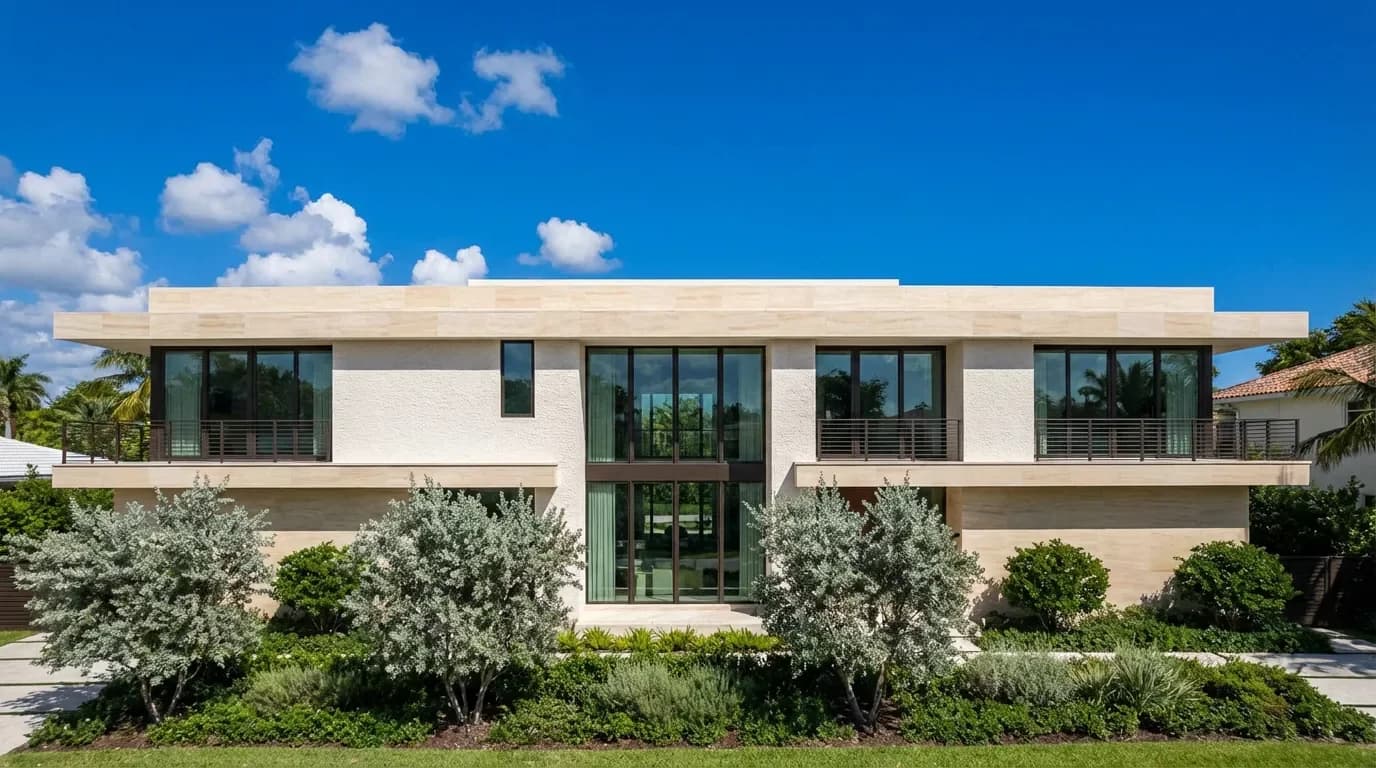
Exterior Living · South Florida
South Florida Outdoor Living Contractor
Outdoor kitchens, pergolas, hardscape, and pool enclosures built for South Florida's sun, salt, and wind. Licensed GC, mechanical & plumbing in one firm.
Reviewed by Aldo Dellamano, Licensed Florida General Contractor·Last updated: April 2026
Exterior Living services
What we build outside the house
Outdoor kitchens, pergolas, hardscapes, and pool construction — each has its own detailed guide.
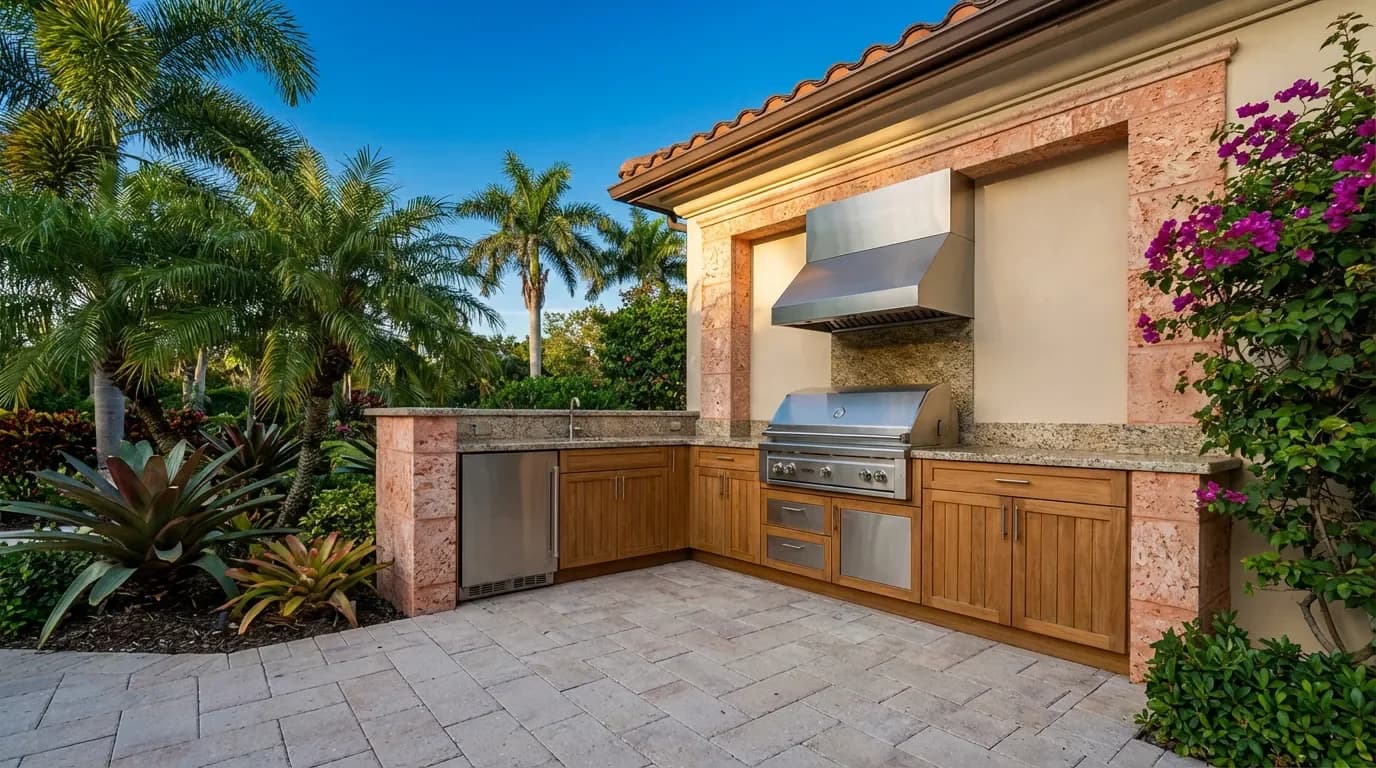
Outdoor Kitchens
Custom built-in outdoor kitchens engineered for South Florida sun, salt, and summer rain.
Learn more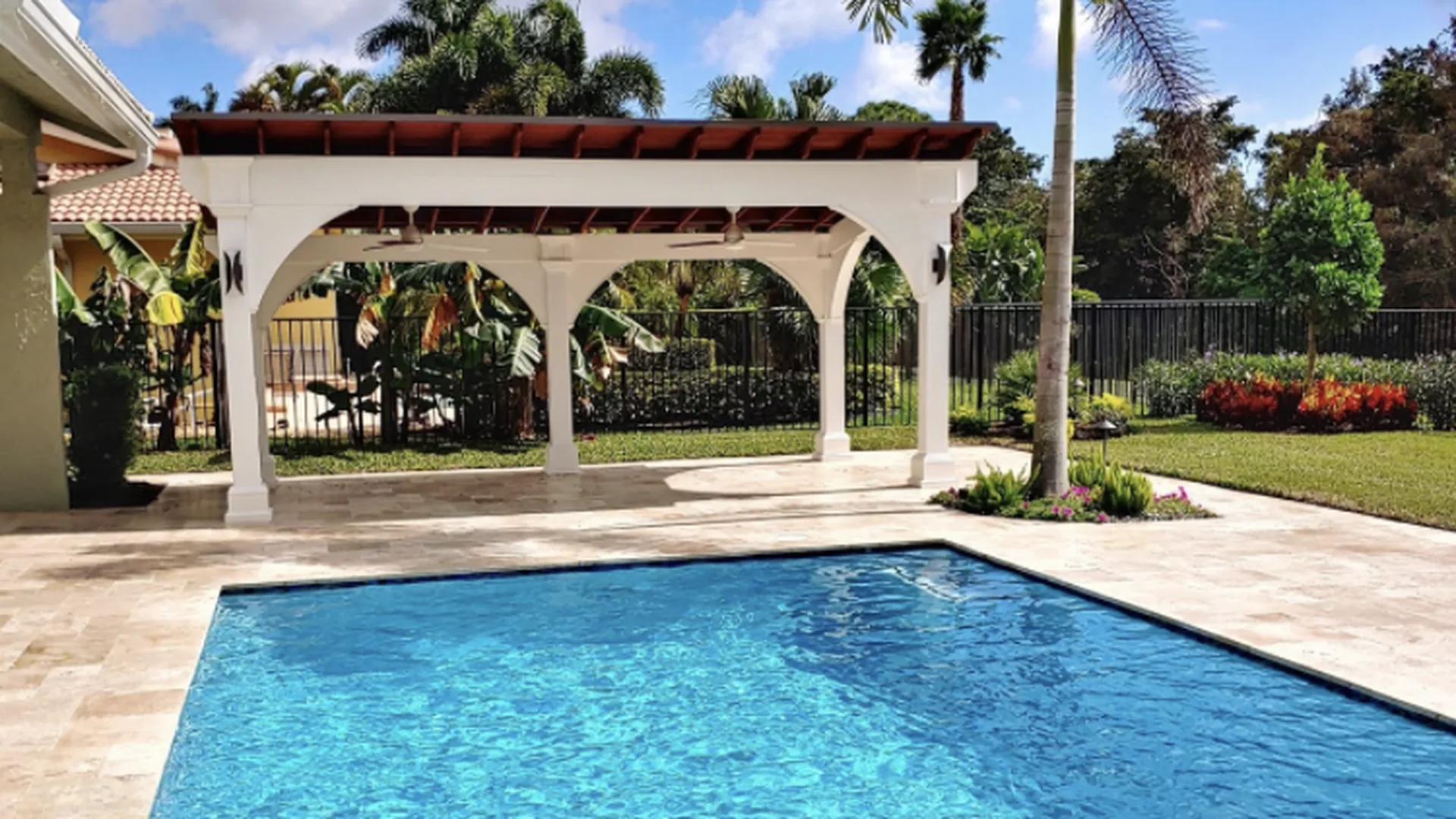
Pergola Builder
Custom pergolas and shade structures engineered for South Florida wind loads and permit code.
Learn more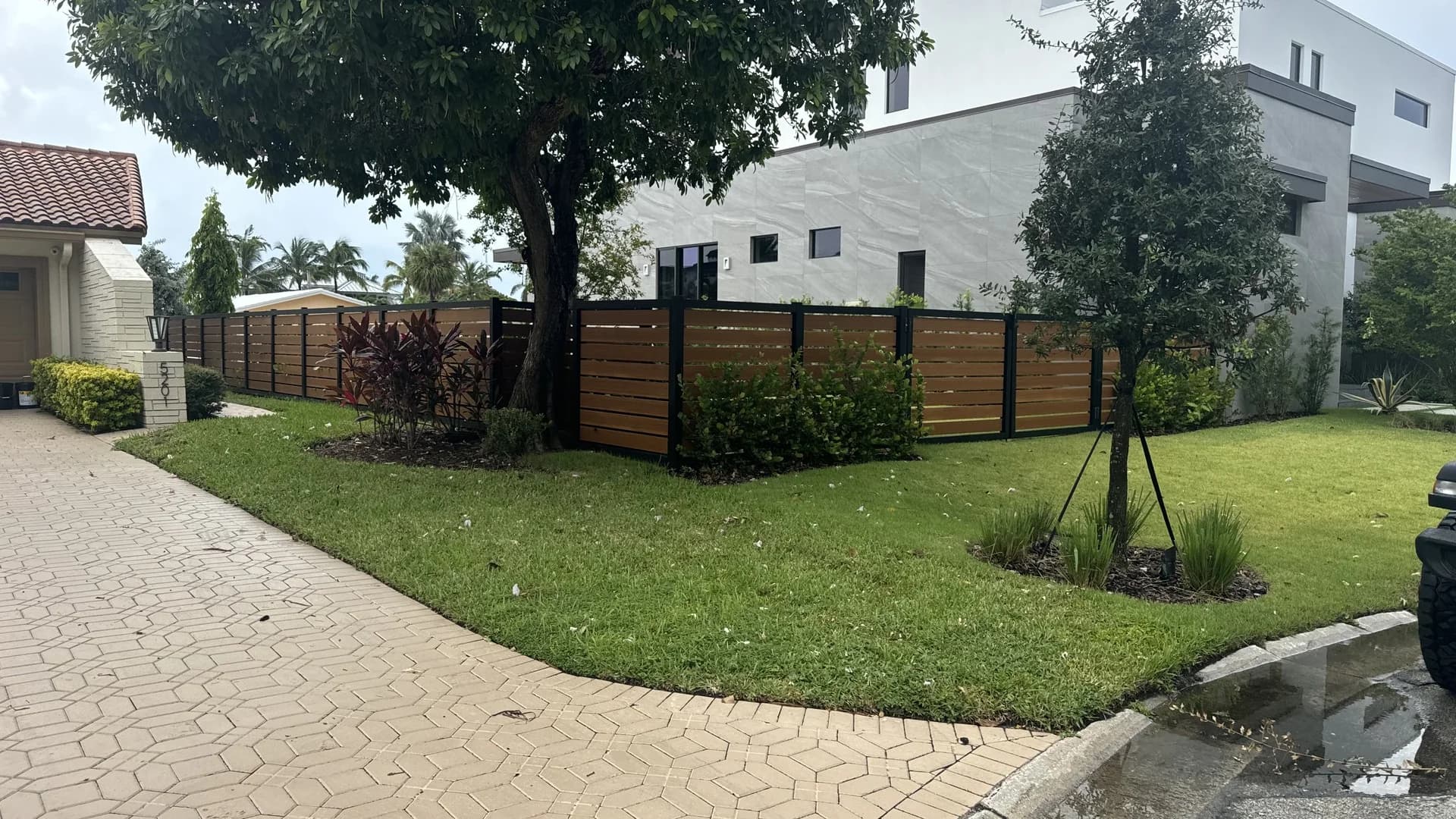
Hardscapes & Paver Patios
Paver patios, driveways, and hardscape design — base prep and drainage engineered for FL rainfall.
Learn more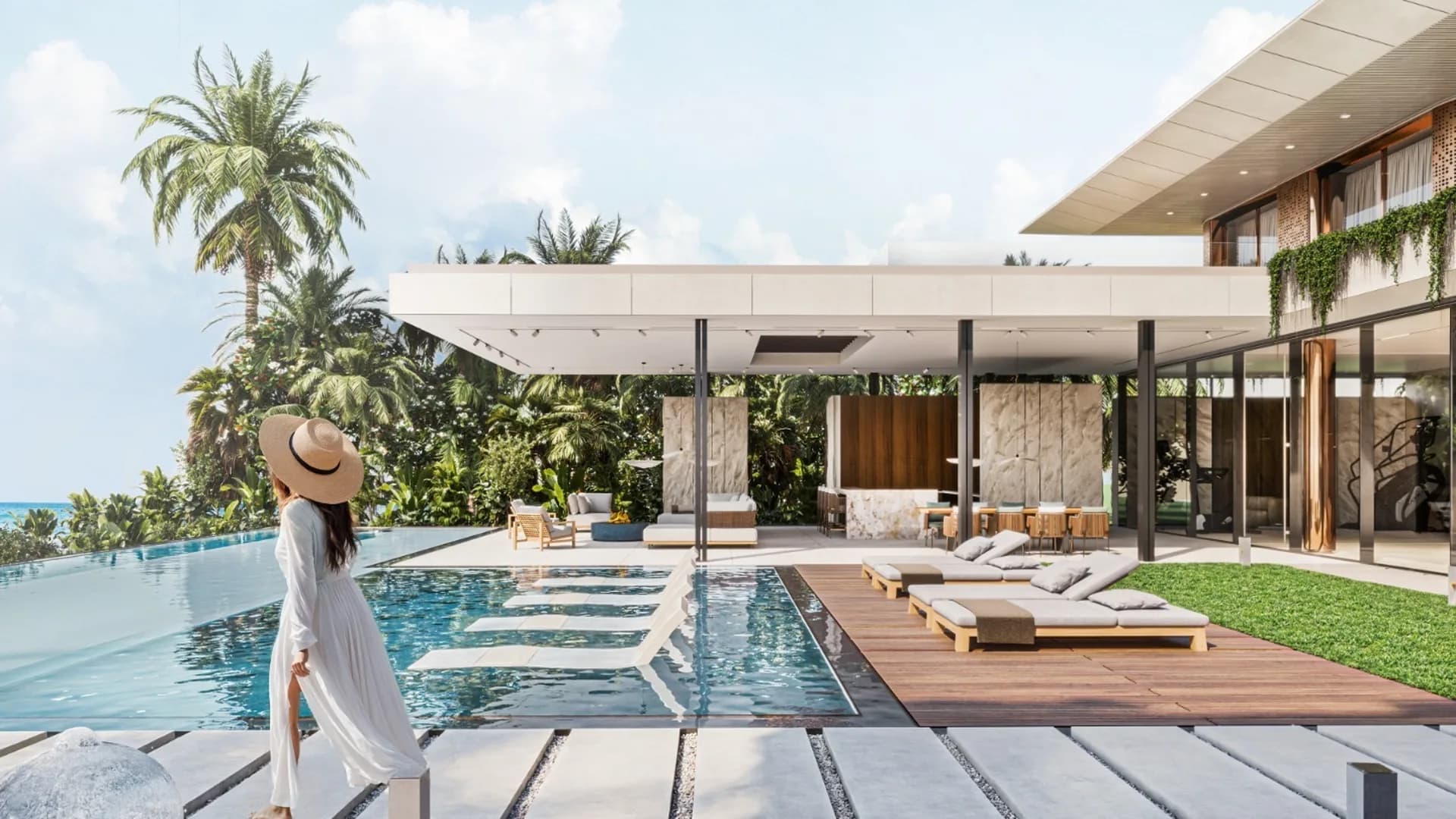
Pool Construction
In-ground pool design and construction — full GC coordination including deck, MEP, and permit.
Learn more
Introduction
outh Florida's outdoor spaces are extensions of the home — but they face conditions most contractors underestimate. Salt air corrodes cheap hardware within months.
Summer storms test every fastener and footing. HVHZ (High-Velocity Hurricane Zone) wind-load rules in parts of Broward County demand engineered drawings and Notice of Acceptance (NOA) documentation for any permanent structure.
Dellamano Construction is a licensed outdoor living contractor that handles the full scope: outdoor kitchens with gas and water rough-in, pergolas and louvered-roof systems rated for South Florida wind speeds, paver hardscape with proper drainage, screen enclosures, pool decks, and weatherproof electrical and audio. All three trade licenses — general contracting, mechanical, and plumbing — are held in-house, so one firm pulls every permit and coordinates every inspection.
Questions about your remodel or addition?
Get a free, no-pressure estimate from our licensed South Florida team.
South Florida receives about 60 inches of rain per year, and summer afternoon storms can drop 2 inches in 30 minutes. That matters for drainage design under every paver field. Coastal communities from Fort Lauderdale and Pompano Beach to Boca Raton and Delray Beach also sit in salt-air zones, where aluminum and stainless steel outlast galvanized hardware by years.
org) requires wind-load engineering on pergolas, shade structures, and screen enclosures — not just roofed additions. In HVHZ areas of Broward County, every structural component needs an approved NOA (a product certification showing the item passed South Florida's specific wind-speed tests). Skipping that step risks a stop-work order and a required demolition.
“Dellamano Construction carries three active Florida DBPR licenses under founder Aldo Dellamano — CGC1525289, CMC1251666, and CFC1434398 — which you can verify at Florida DBPR.”
com/). That means one team pulls the GC, mechanical, and plumbing permits without subcontracting those scopes out.
One Firm, Three Trade Licenses
Dellamano Construction holds active Florida licenses as a Certified General Contractor, Certified Mechanical Contractor, and Certified Plumbing Contractor — all under one roof. That removes the coordination failures that come when a GC subs out gas lines and electrical rough-in to separate crews.
What You Get
What's Included in a Full Outdoor Living Build
Outdoor Kitchen
Full design with grill island, hood ventilation, under-counter refrigeration, and in-house gas and water rough-in. We spec marine-grade stainless and concrete board frames — not wood — so the structure resists moisture and insects.
Pergolas & Louvered Roofs
Aluminum pergola systems and motorized louvered-roof panels engineered with NOA documentation for South Florida wind loads. Louver systems let you control sun and rain without a fixed roof permit in most jurisdictions.
Paver Patios, Driveways & Walkways
Concrete or travertine pavers set over a compacted base with open-jointed or permeable bedding. Proper edge restraints and slope (1/8-inch per foot minimum) keep water draining away from the home's foundation.
Pool Decks & Screen Enclosures
Brushed or cool-coat concrete, travertine, or paver pool decks. New screen enclosures and full pool-cage re-screens using 20/20 no-see-um or standard fiberglass mesh in aluminum frames engineered for local wind codes.
Outdoor Electrical, Lighting & Audio
Weatherproof rough-in for low-voltage landscape lighting, GFCI (ground-fault circuit interrupter) outlets, ceiling fans, and distributed audio. All wiring is run in conduit and brought to the panel under permit.
In the Field
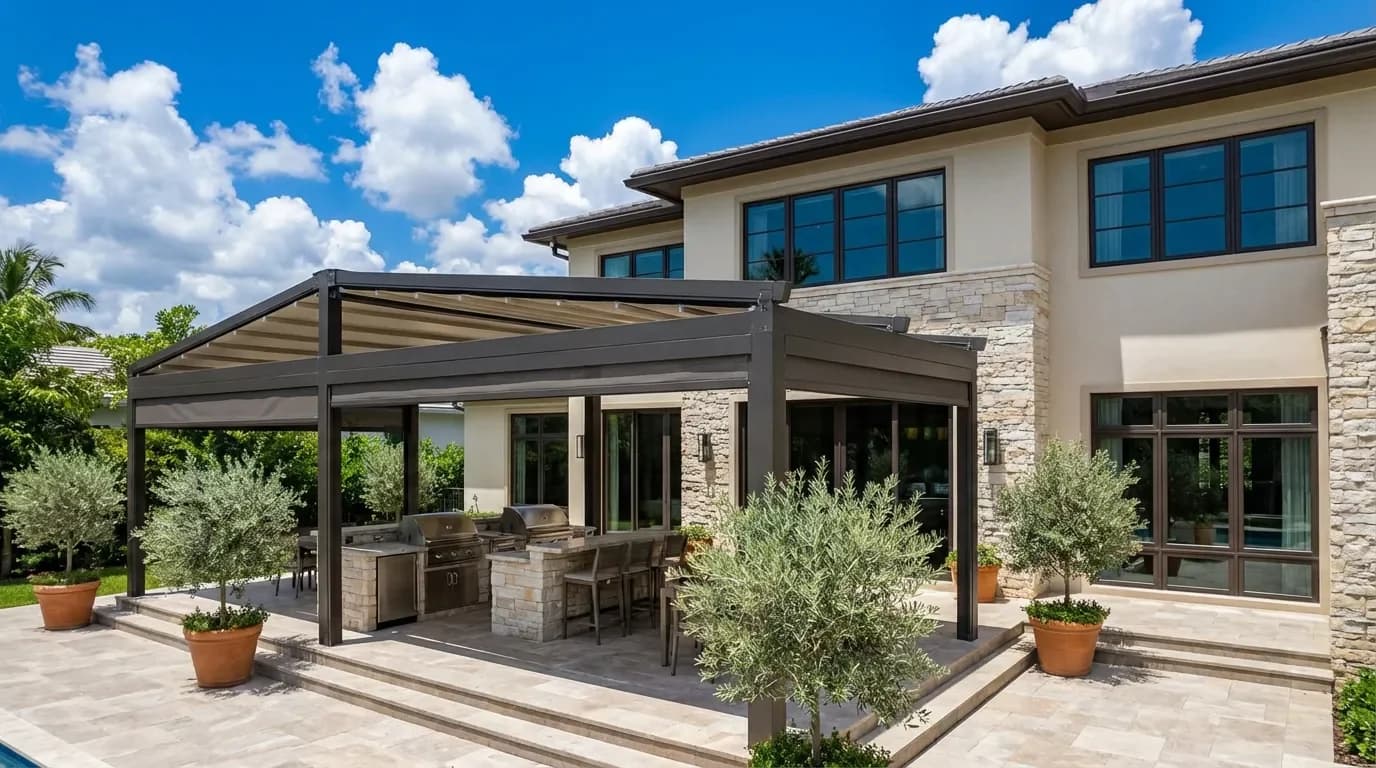
Engineered Pergola & Outdoor Kitchen
Engineered Pergola & Outdoor Kitchen — Dellamano Construction, Fort Lauderdale, FL
A great outdoor kitchen starts with the rough-in — not the tile. Gas lines need to be sized for BTU load: a 60,000 BTU grill plus a 15,000 BTU side burner plus a patio heater can exceed what a standard 3/4-inch supply line handles. Dellamano self-performs all gas and water rough-in under its active CMC and CFC licenses, so sizing is engineered before the island frame goes up.
Hood ventilation matters just as much. A recirculating hood (one that filters without ducting to the outside) works fine for occasional use. A high-output grill with a 60,000+ BTU rating needs a ducted hood pulling at least 400 CFM (cubic feet per minute) to clear grease and smoke.
“Concrete board or 100% aluminum frames are the only materials worth using in South Florida humidity.”
Concrete board or 100% aluminum frames are the only materials worth using in South Florida humidity. Wood framing in an outdoor kitchen will rot within 3-5 years in this climate. We also rough in dedicated 20-amp circuits for refrigeration, so a single GFCI trip doesn't kill every appliance at once.
South Florida has learned hard lessons from hurricanes Andrew (1992), Wilma (2005), Irma (2017), and Nicole (2022). Any structure attached to a home transfers wind loads directly to the house frame. That means pergola footings need to be engineered — typically 24-inch diameter concrete piers going 18-24 inches below grade — and the beam connections need to use hurricane straps or post-base hardware with documented load ratings.
aspx) requires product approvals for structural aluminum systems. Motorized louvered-roof systems like those from Equinox or Struxure use extruded aluminum rafters tested to 130 mph and above, and they come with NOA documentation for South Florida. Fixed solid-roof pergola additions follow the same permit path as a room addition — they need engineered drawings, a building permit, and inspections.
“South Florida has learned hard lessons from hurricanes Andrew (1992), Wilma (2005), Irma (2017), and Nicole (2022).”
aspx) and Broward County, including HOA/ARB (Architectural Review Board) submission where your community requires it.
Process
How an Outdoor Living Project Gets Built
- 1
Design & Site Assessment
We measure the space, check drainage slopes, locate gas and water supply lines, and identify HOA setback rules. This step catches conflicts — like a drain that runs under a proposed island — before any permits are pulled.
- 2
Permit & HOA Submission
We prepare permit drawings with structural, MEP (mechanical, electrical, plumbing), and site plan sheets. For communities with HOA or ARB review, we submit the package and track approval so the project timeline stays on schedule.
- 3
Site Prep & Rough-In
Ground is excavated for footings and conduit. Gas lines, water supply, drain lines, and electrical conduit are run and inspected before any concrete or paving goes down. Doing rough-in first avoids cutting up finished hardscape later.
- 4
Structure & Hardscape
Pergola posts are set and beams installed. Paver base is compacted and screeded. Pool deck or patio concrete is poured and finished. Screen enclosure aluminum frame is erected and fastened to engineered anchor bolts.
- 5
Finish & Final Inspection
Outdoor kitchen islands are tiled or clad, appliances are connected, and lighting fixtures are installed. The county inspector signs off on the final, and you receive a Certificate of Completion — which matters when you sell the home.
In the Field
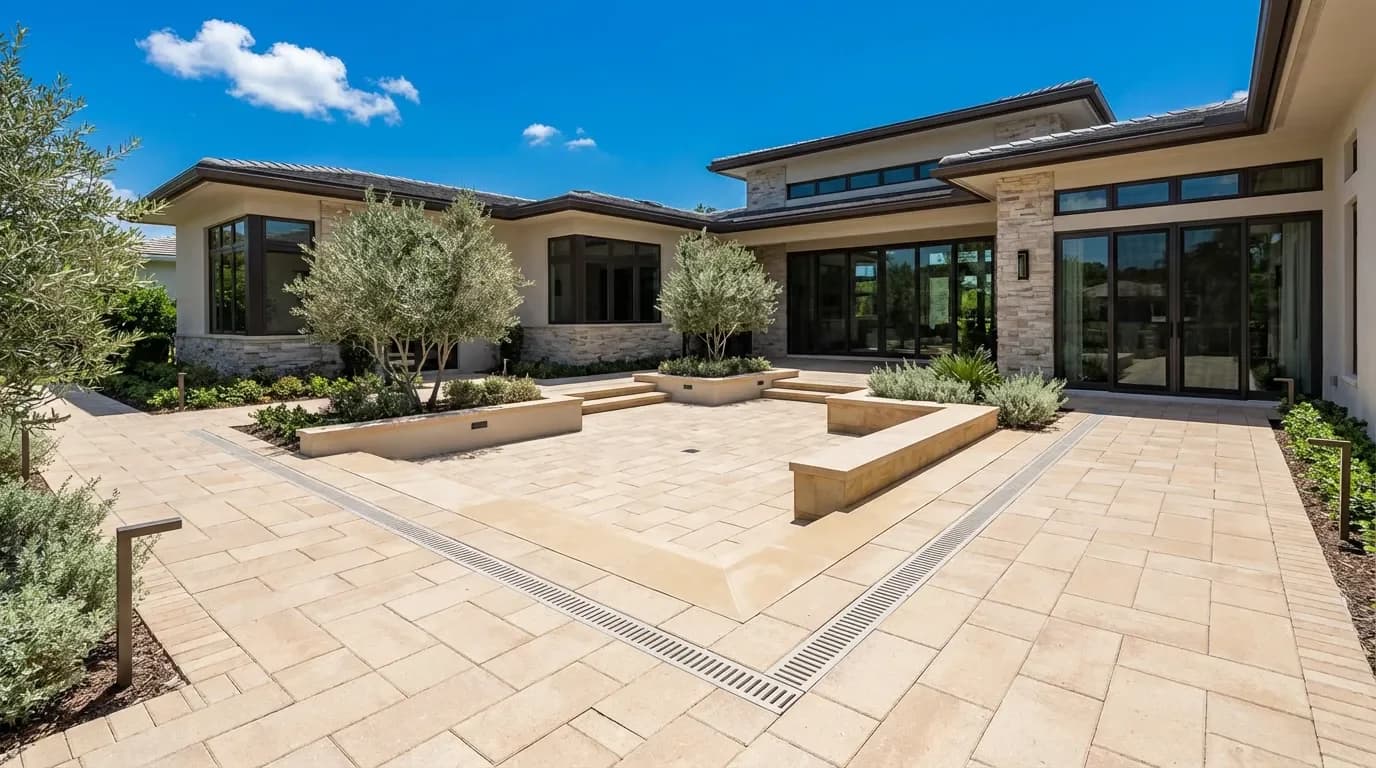
Paver Hardscape with Drainage Design
Paver Hardscape with Drainage Design — Dellamano Construction, Fort Lauderdale, FL
Permits Protect Your Home's Value
An unpermitted pergola, kitchen, or screen enclosure shows up as a red flag during a home sale inspection — and can require demolition to close the deal. Every Dellamano project pulls the required permits and passes final inspection.
Ready to talk to a real local GC?
Tell us about your project — we respond within 24 hours.
Paver hardscape in South Florida needs 3 things to last: a properly compacted base, edge restraints that lock the field, and a drainage plan. Without a 4-inch compacted limerock base (the crushed limestone aggregate standard in South Florida), pavers shift under heavy rain and root pressure within a few years.
Permeable paver systems — which use open joints filled with stone instead of polymeric sand — let rainwater drain through the field rather than sheet-flow toward the house or property line. gov/portal/home) shows many South Florida properties in AE or VE flood zones, where finished surface elevations must meet base flood elevation (BFE) requirements.
“Without a 4-inch compacted limerock base (the crushed limestone aggregate standard in South Florida), pavers shift under heavy rain and root pressure within a few years.”
Travertine is the most popular pool deck material in this market because it stays cool underfoot (its porous surface doesn't absorb heat the way solid concrete does) and it drains quickly. Brushed concrete and cool-coat finishes are lower-cost options that still comply with the slip-resistance requirements in the Florida Building Code.
By the Numbers
South Florida Outdoor Living by the Numbers
3
Active DBPR Licenses
GC, mechanical, and plumbing under one firm
130+ mph
HVHZ Wind Rating
Required for structural approval in parts of Broward
60 in.
Annual Rainfall
Why drainage design is non-negotiable
4 in.
Compacted Base Depth
Minimum limerock base for paver longevity
Side-by-Side
Louvered Roof vs. Fixed Pergola: Which Is Right for You?
| Feature | Motorized Louvered Roof | Fixed Solid-Roof Pergola |
|---|---|---|
| Rain protection | Full — blades close in seconds | Full — permanent cover |
| Ventilation control | Adjustable blade angle, 0–90° | None — fixed structure |
| Permit path | Structural permit, simpler drawings | Full addition permit, engineered drawings |
| Wind rating | 130+ mph with NOA documentation | Engineered per site — typically 160+ mph |
| Cost range | Higher upfront ($15K–$40K+) | Varies widely by size and roof type |
| HOA approval | Often easier — no new roofline | May require ARB hearing |
Not sure what your project should cost?
Free, itemized estimates — no obligation, no sales pressure.
Dellamano Construction works across both counties for outdoor living projects. In Broward, we build in coastal communities like Fort Lauderdale, Pompano Beach, Hollywood, and Dania Beach — where salt air and HVHZ rules require marine-grade materials and NOA-documented hardware.
In the gated suburban communities of Parkland, Weston, Coral Springs, and Plantation, HOA design guidelines add an extra approval layer, and we manage that ARB submission process from start to finish. In Palm Beach County, we serve waterfront and coastal addresses in Boca Raton, Delray Beach, Boynton Beach, and Palm Beach, as well as inland communities in Wellington, Royal Palm Beach, Palm Beach Gardens, and West Palm Beach.
“Palm Beach County permitting moves through Palm Beach County Planning, Zoning & Building, and timelines vary by project type.”
aspx), and timelines vary by project type. Our work as an outdoor living contractor fits naturally alongside our Construction & Renovation services — many homeowners pair an outdoor kitchen build with an interior kitchen remodel or a whole-home renovation in the same project sequence.
ENERGY STAR Outdoor Lighting Options
We spec ENERGY STAR-rated LED fixtures for outdoor kitchens, pergolas, and landscape lighting — cutting energy use by up to 75% versus incandescent and reducing heat output in an already-warm climate.
Get a Free Outdoor Living Estimate
Ready to build an outdoor kitchen, pergola, paver patio, or screen enclosure in South Florida? Dellamano Construction pulls every permit, handles HOA submissions, and self-performs gas, water, and electrical rough-in under three active Florida DBPR licenses. Contact us for a free on-site estimate and let's design an outdoor space built to last in this climate.
Frequently Asked
Common Questions
Do I need a permit for an outdoor kitchen in Broward County?
+
Yes. In Broward County, an outdoor kitchen with gas lines, electrical rough-in, or a permanent structure requires a building permit. Gas piping falls under a mechanical permit, water lines under a plumbing permit, and the structure itself under a building permit. Dellamano Construction pulls all three permit types in-house because it holds active Florida licenses as a Certified General Contractor (CGC1525289), Certified Mechanical Contractor (CMC1251666), and Certified Plumbing Contractor (CFC1434398). Work done without permits can create problems at resale and may require demolition if discovered during a home inspection.
What wind rating do pergolas need in South Florida?
+
In parts of Broward County that fall under the High-Velocity Hurricane Zone (HVHZ), pergolas and shade structures must use components with a Notice of Acceptance (NOA) — a product certification showing the system passed South Florida's specific wind-load tests. Many aluminum pergola systems are rated at 130 mph or higher and carry NOA documentation. Outside HVHZ zones in Palm Beach County, structures still need to meet Florida Building Code wind-load requirements for the local design wind speed, which ranges from 130 to 160+ mph depending on location. Dellamano Construction prepares engineered drawings and submits permits for pergola projects across both Broward and Palm Beach Counties.
What is the best paver material for a South Florida pool deck?
+
Travertine is the most popular choice for South Florida pool decks because its natural porosity keeps the surface cooler underfoot than solid concrete — an important comfort factor on hot days. It also drains quickly and resists the slip hazards that build up around pool edges. Concrete pavers are a cost-effective alternative that offer a wide range of colors and textures. Both materials require a 4-inch compacted limerock base and proper edge restraints to prevent shifting under South Florida's frequent heavy rains. Brushed concrete and cool-coat finishes are lower-cost options that still meet the Florida Building Code's slip-resistance standards for pool decks.
Does Dellamano handle HOA and ARB approvals in Palm Beach County gated communities?
+
Yes. Many communities in Palm Beach Gardens, Wellington, Boca Raton, and other Palm Beach County areas require Architectural Review Board (ARB) approval before any exterior structure is built. Dellamano Construction prepares the required site plans, elevation drawings, and material specifications and submits the full package to the HOA or ARB on your behalf. We track the approval process and coordinate revisions if the board requests changes. This step runs in parallel with the county permit application to avoid delays in the overall project timeline.
Can an outdoor living contractor in Fort Lauderdale handle pool enclosures and re-screens?
+
Yes. Dellamano Construction builds new aluminum-framed screen enclosures and completes full pool-cage re-screens throughout Fort Lauderdale and the surrounding Broward County area. New enclosures require a structural permit and must use aluminum frame systems engineered for local wind loads. Re-screens — replacing the mesh without changing the frame — typically require a simpler permit or in some jurisdictions a homeowner exemption, but the framing must still be in sound condition. We inspect the existing frame during every re-screen estimate and flag any repairs needed before new mesh is installed.
How long does an outdoor living project take from permit to completion in South Florida?
+
Timeline varies by scope and jurisdiction, but a typical outdoor kitchen and pergola project in South Florida runs 10–16 weeks from signed contract to final inspection. Permit review typically takes 3–6 weeks at Broward County Building Code Services and a similar window at Palm Beach County Planning, Zoning & Building. HOA or ARB review adds 2–4 weeks on top of that if your community requires it. The construction phase for a mid-size outdoor kitchen, pergola, and paver patio is usually 3–5 weeks once permits are in hand. Projects in HVHZ zones with full structural drawings may have longer review periods.
What should I look for when hiring an outdoor living contractor in South Florida?
+
Look for a contractor who holds an active Florida Certified General Contractor license and — if the project includes gas lines or plumbing — active mechanical and plumbing licenses as well. You can verify any Florida contractor's license at the Florida DBPR website (myfloridalicense.com). Ask specifically whether the contractor pulls permits in their own name or expects you to pull an owner-builder permit. Ask whether they have experience with HVHZ wind-load requirements if you're in Broward County. A contractor who handles permit drawings, HOA submissions, and all MEP rough-in in-house reduces your risk of coordination failures and permitting delays.